

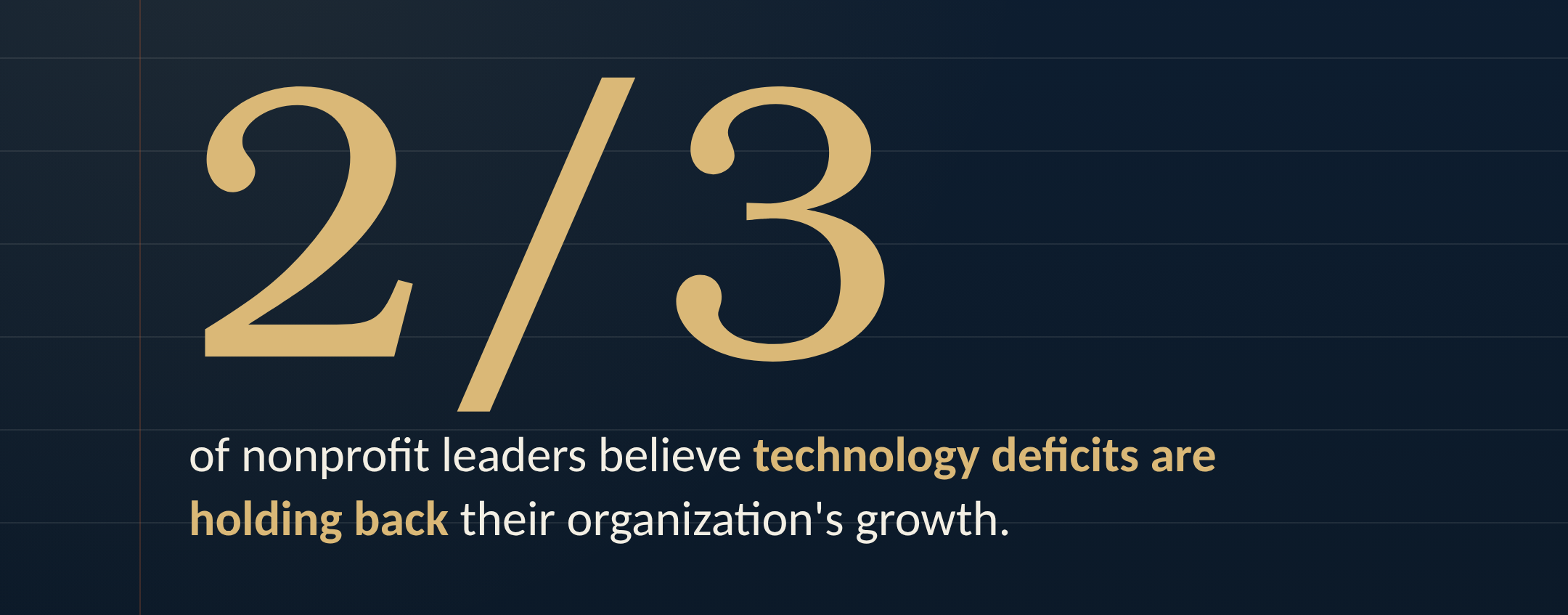
The result is a quiet but real barrier. It becomes harder to attract new support, keep people engaged, and show that resources are being used well.
What’s Missing
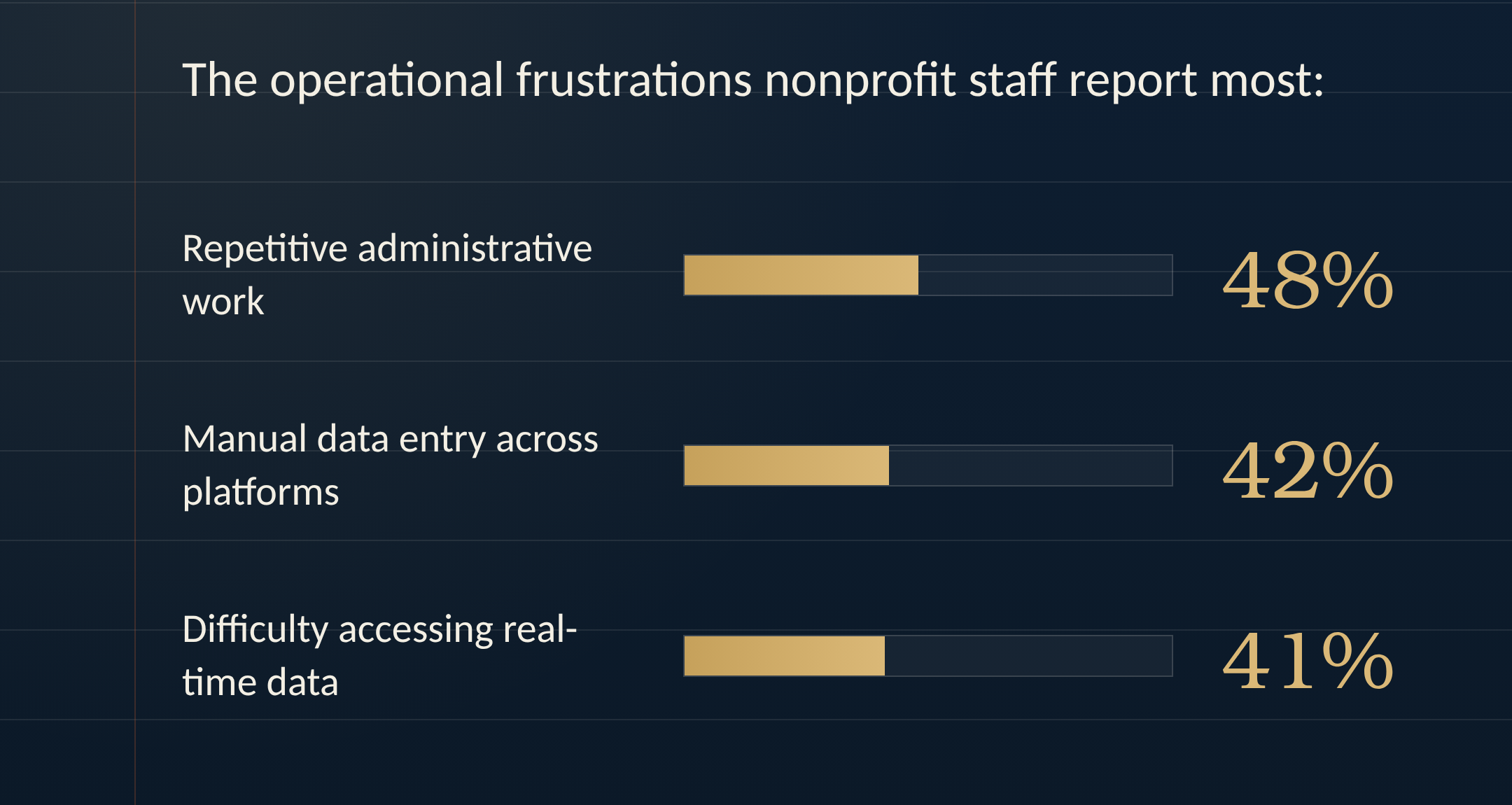
Many small nonprofits still manage volunteers with spreadsheets and email. Formal HR or volunteer tools designed for irregular schedules, skill matching, and easy sign-ups are uncommon. Financial tracking often relies on generic small-business software or spreadsheets that struggle with restricted funds, grants, and clear reporting. Communication happens across scattered channels—email, social media, websites—that rarely connect cleanly.
Staff end up spending hours on manual tasks instead of building relationships or delivering programs.
Why It Happens
Money is the biggest obstacle. Technology competes with program costs, and many founders and leaders overlook operational tools. Time and skills are limited too—most teams are already stretched thin. And many available systems weren’t built for nonprofit realities, so they feel complicated or poorly matched.
The Real Cost
When systems are weak or missing, recruiting volunteers slows down. Interested people get frustrated by slow responses or unclear next steps. Current volunteers feel less connected and are more likely to drift away. Financial reports take longer to produce, which makes it harder to answer leadership quickly and build trust. Communication feels inconsistent, so opportunities to engage supporters get missed.
The organization looks less organized than it is, and the people who want to help face unnecessary friction.
A Simpler Path Forward
You don’t need a full tech overhaul. Start with the biggest pain points—where time is wasted or where people drop off. Choose tools that are simple, affordable, and actually built for nonprofit work: flexible volunteer management, clear fund-based financial tracking, and easy communication that reaches people without extra hassle.
Even modest improvements free up staff time, make it easier for people to step forward and stay involved, and strengthen the trust that brings more support. Closing these everyday gaps is one of the most practical ways for nonprofits to expand their impact without expanding their payroll.